
The stories we mean to write down
Most families have someone, a grandparent, an aunt, an elder who holds the stories. The names behind old photographs. The family recipe nobody's written down. The health history that only comes up in passing. We tell ourselves there's time to capture it properly, and then one day there isn't.
Grandparents Day, coming up on September 13th, is a good nudge to actually do something about that instead of just thinking about it.
What a Legacy Binder actually holds
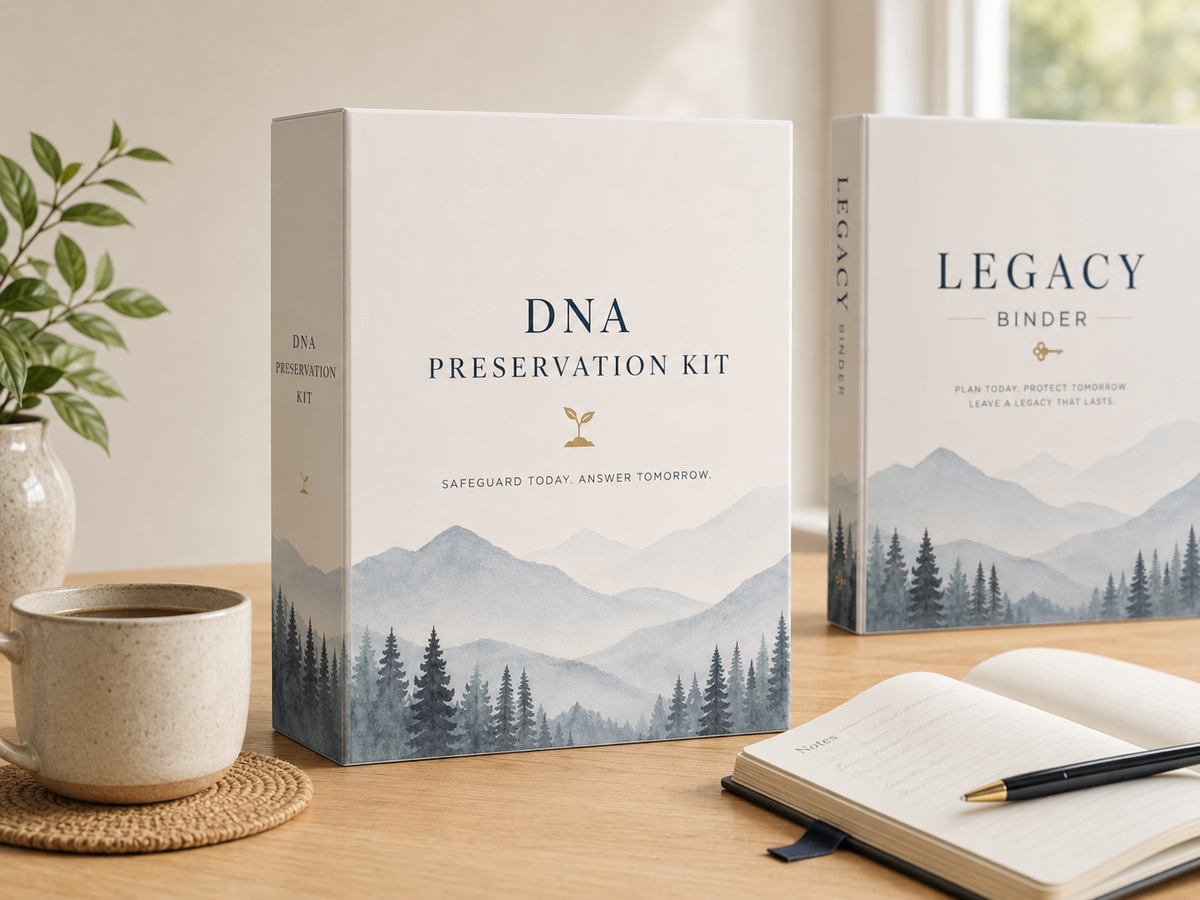
Our Legacy in Life Binder isn't just a scrapbook. It's a structured way to organize the things families actually need and want to preserve:
- Family history and personal stories, in the words of the person who lived them
- Important documents and where to find them
- A Digital Legacy section covering accounts, passwords, and instructions that families are often left scrambling to find later
- Space for photos, letters, and the kind of details that don't fit anywhere else
It's built so that putting it together doesn't feel overwhelming, and so the people who receive it later have something organized instead of a shoebox of loose papers.
Where DNA preservation fits in
Family history isn't only stories and documents, it's also biological. Our DNA Preservation Kit gives families a way to bank a DNA sample now, while it's simple to do, rather than trying to recover one later under difficult circumstances.
We offer two tiers:
- Home Banking, a keepsake-level option for families who want a straightforward way to preserve a sample
- Certified Capsule, a more formal preservation option with documented chain of custody, for families who may need that sample to hold up for legal or medical purposes down the road
Paired with a Legacy Binder, it means a family isn't just preserving memories, they're preserving something that can answer real questions for future generations, from genealogy curiosity to medical history.
Which tier fits your family?
Home Banking tends to be the right fit for families who want a meaningful keepsake, something to have on hand for genealogy questions, ancestry curiosity, or simply peace of mind. It's a lower-cost entry point for preserving a sample without needing formal documentation behind it.
Certified Capsule is worth the step up if there's any chance the sample might need to serve a legal or medical purpose later, disputed inheritance, an unresolved family question, or a future health situation where a preserved sample could matter. The documented chain of custody is what makes the difference between "we have a sample somewhere" and "we have a sample that can actually be used if it's ever needed."
If you're not sure which one fits, that's a normal question, and it usually comes down to whether the sample might ever need to hold up outside the family.
What to include first if you're just getting started
A Legacy Binder can feel like a big project, so it helps to know where to start. A few things worth capturing first:
- Full names and relationships, written out even when they seem obvious now. They won't always be obvious to the next generation.
- One or two stories in the person's own words, recorded or written down. These are usually the first things families wish they'd captured sooner.
- A list of important accounts and where key documents are kept, which is often the most immediately useful section for whoever inherits the binder.
- Any known family health history, especially anything that could matter for future generations.
You don't have to finish the whole binder in one sitting. Starting with even one or two of these sections is enough to make real progress.
Starting the conversation
Grandparents Day is a natural moment to bring this up without it feeling heavy. It doesn't have to be a hard conversation about mortality, it can simply be, "let's make sure we don't lose any of this." That's really what both of these tools are for.
If you're ready to put a Legacy Binder or DNA Preservation Kit together for your family, we can walk you through what fits your situation best.