
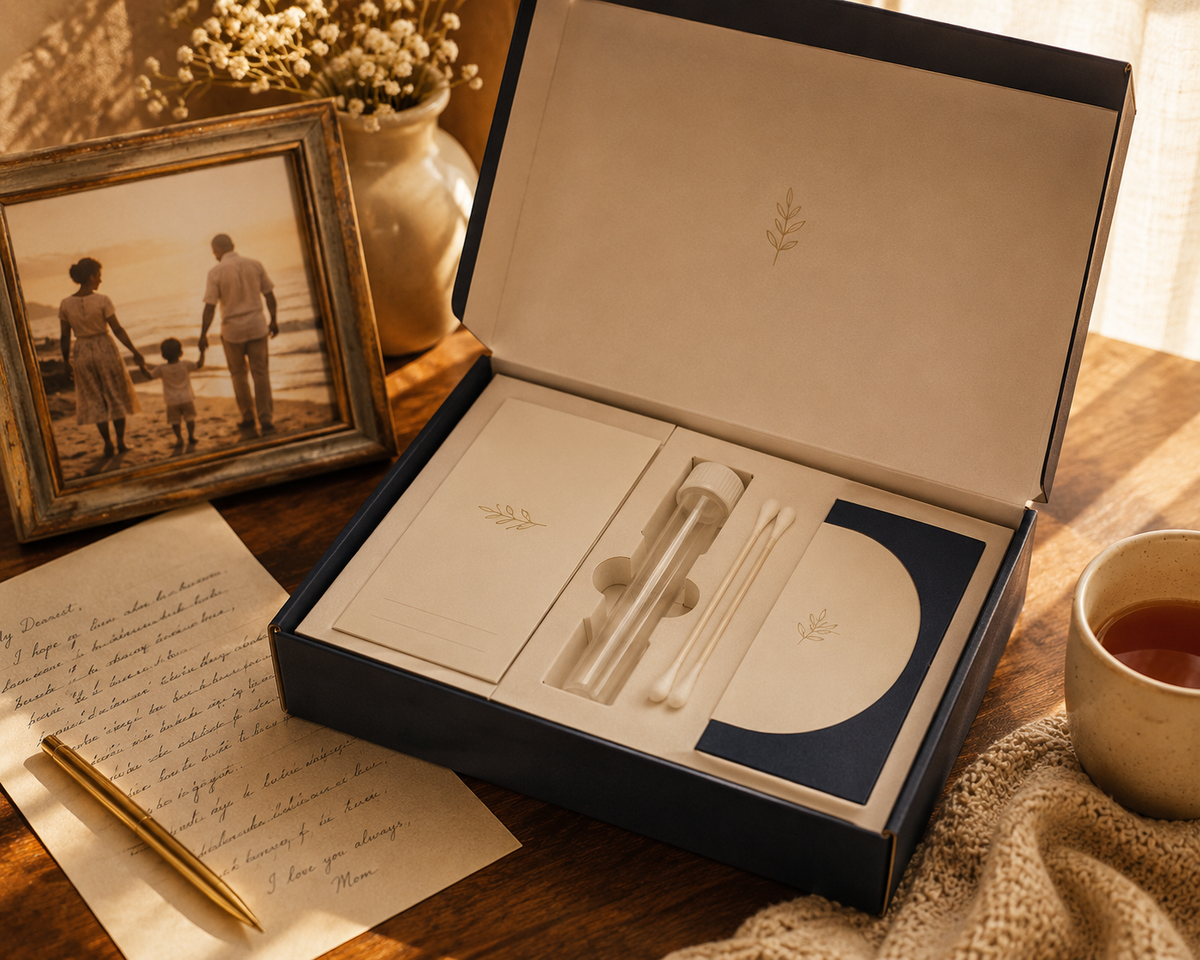
There's a photo album in most homes, a box of letters, maybe a lock of hair tucked into an old Bible. Families have always found ways to hold onto a piece of the people they love. DNA preservation is a modern version of that same instinct: a way to keep something of your family's story safe, long after a moment has passed.
This closes out our Preparedness Month series, and it's a gentle one. We're not talking about a lab test or a diagnosis. We're talking about keeping something safe, just in case your family ever wants it later.
What DNA Preservation Actually Is
DNA preservation, sometimes called DNA banking, is the process of collecting and safely storing a sample, usually a simple cheek swab, so the genetic information inside it stays intact for years or even decades. That's the whole idea: preserve now, decide what to do with it later.
It's important to be clear about what this is not. DNA preservation is not a paternity test, a health screening, or any kind of diagnostic lab work. Nothing is analyzed or reported when you preserve a sample. You're simply making sure the information exists and stays usable, in case your family ever wants to test it, whether that's for a genealogy question, a family history project, or something more personal down the road.
Why Families Choose to Preserve DNA
The reasons are usually less clinical than people expect. Families preserve DNA for an aging parent or grandparent because once that person is gone, the option to ever learn more from their genetic story goes with them. Others do it simply because they want a tangible piece of a loved one kept safe, the same instinct behind keeping a handwritten letter or a childhood photo.
Some families think ahead to future generations who might have questions nobody can answer yet, a grandchild curious about where a certain trait came from, or a family history that was never fully written down. Preserving a sample now means that door stays open.
How the Process Works
Preserving DNA is simple and doesn't involve a needle or a clinical visit in the way people sometimes assume.
-
A simple cheek swab. The collection itself takes just a few minutes and is no more involved than a routine dental checkup.
-
Careful sealing and storage. The sample is preserved in a way designed to keep the genetic material stable for the long term, protected from moisture and degradation.
-
A keepsake, not a report. You receive a preserved sample and documentation confirming it was collected and stored, not a test result or analysis.
-
Nothing happens until you decide. The sample sits safely preserved. If your family ever wants to have it tested down the road, that's a separate decision made later, on your own timeline.
Two Ways to Preserve
Not every family needs the same level of preservation, so there are two tiers to choose from.
A home keepsake option is designed for families who want something simple to keep at home, a preserved sample stored safely without the added documentation of a certified process. It's a straightforward way to hold onto a piece of a loved one's genetic story.
A certified option adds a documented chain-of-custody form and a Certificate of Preservation, giving families a more formal record alongside the sample itself. This tier tends to appeal to families who want the extra layer of documentation, whether for peace of mind or for potential future use.
Either way, what you're preserving is the same: a simple, safely stored sample, ready if your family ever wants it.
Preserving a Story, Not Just a Sample
For a lot of families, this ties into something bigger than genetics. It sits alongside the same instinct that leads people to fill out a Legacy in Life Binder or finally get their family documents organized: the desire to leave something behind that your family can actually use and understand, rather than a scattered collection of things nobody explained.
DNA is simply one more piece of that story, quietly waiting in case it's ever needed.
Why Middle Tennessee Families Are Thinking About This Now
We hear from families across Nashville, Hendersonville, and the rest of Middle Tennessee who are caring for aging parents, planning ahead after a health scare, or simply trying to get their affairs organized during a season that feels right for it. Preservation often comes up alongside those same conversations, not as an emergency step, but as one more quiet way to be prepared.
Frequently Asked Questions
Is DNA preservation the same as a paternity or DNA test? No. Preservation simply collects and safely stores a sample. Nothing is tested, analyzed, or reported unless your family later decides to have that sample tested.
Who typically preserves their DNA? Often it's an aging parent or grandparent, though any family member can choose to preserve a sample as a keepsake or for potential future use.
How long does a preserved sample last? Preserved samples are designed to remain stable for years, with proper storage conditions protecting the genetic material over the long term.
Can a preserved sample be tested later? Yes. Preservation simply keeps the option open. If your family wants to test the sample in the future, that's a separate step taken when you're ready.
Preserve a Piece of Your Family's Story
You don't need a reason beyond wanting to keep something safe.
Explore the DNA Preservation Kit →
That's a wrap on Preparedness Month. Thank you for following along with us this September.
SurePath Diagnostics helps Nashville, Hendersonville, and Middle Tennessee families get answers and stay prepared. Read more on preservation and family readiness on our blog.